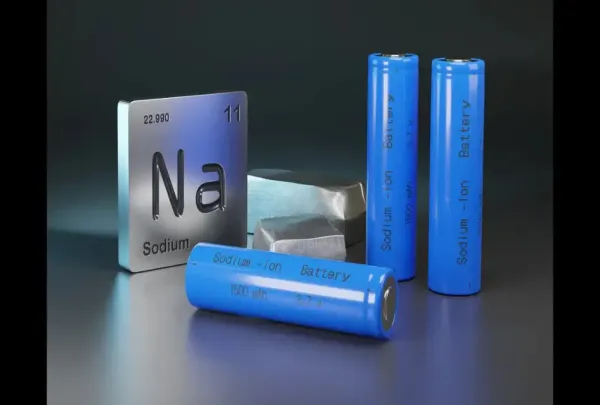
Three Seattle engineers want to replace lithium with the element in table salt, raise nearly $1.1 million to take on China; plan 60 kWh battery system for Washington community hub (Photo: iStock)
Sodium-ion battery technology explained: Sodium, which is the same element found in table salt, could soon become a cheaper alternative to lithium in batteries. A Seattle startup Emerald Battery Labs is working to make that happen. And it has raised under $1.1 million in pre-seed funding to develop its sodium-ion technology and scale production.
Lithium is widely used in batteries but extracting it can be difficult. And US production remains limited. Sodium is more abundant and less expensive. Sodium-ion batteries may also offer longer life and fewer fire concerns, although their lower energy density means they need to be larger than lithium-ion batteries to deliver the same amount of power, as per a GeekWire report.
Emerald is entering a market that already includes US companies such as Peak Energy, Nanode Battery Technologies and Unigrid. The startup is now looking to expand production and find partners for pilot projects.
According to GeekWire report, the funding came from Seattle-based E8, members of the E8 network who invested directly and an undisclosed family venture office. Emerald also expects to hire more employees next year.
Co-founder David Bell said, “As battery chemistries evolve, as technology evolves, people are going to find new ways to use energy storage technology,” as quoted in the report.
The University of Washington's Clean Energy Institute (CEI) is the first public, open access lab of its kind on the West Coast. Its 1,600 square foot expansion was completed in February with $7.5 million in state funding through the Climate Commitment Act.
Emerald made its first pouch cells at the facility. Standard size cells produced there can hold up to 10 amp-hours, which is around two to three times the capacity of a typical smartphone battery.
Kjell Schroder said that, "The Testbeds facility is a key part of our core value proposition to investors: that we can continue to iterate, innovate, and produce batches of demo cells for a range of potential applications without major capital expenditure," as quoted by CEI.
MarketScale reported that a $671,000 grant from TransAlta Centralia Generation LLC will support part of the project. Pickering Barn is part of Issaquah's Resilience Hub Initiative and hosts community events, including a weekly farmers market from May through October.
The city installed heat pumps at the barn in 2025 and added the solar array in early 2026. Battery storage is the next planned phase.
The system has not yet been installed. It still needs to go through design, certification, permitting, procurement and commissioning before it can provide backup power. The project has not specified how long the battery could keep the facility running during an outage.
Emerald's work will include connecting the battery to the solar and electrical equipment, integrating its energy management and battery management systems, and validating system safety. The company plans to pursue UL 1973 certification for stationary batteries, UL 9540 certification for the complete energy storage system and UL 9540A testing for thermal runaway fire propagation.
Bell is CEO and co-founder, he previously worked in product management & customer programs at Group14 and Ionic Materials. Schroder, the CTO and co-founder, has held leadership roles at Form Energy, Ionic Materials and EnPower. Stocks is COO and co-founder and previously led global business development at Group14.
Lithium is widely used in batteries but extracting it can be difficult. And US production remains limited. Sodium is more abundant and less expensive. Sodium-ion batteries may also offer longer life and fewer fire concerns, although their lower energy density means they need to be larger than lithium-ion batteries to deliver the same amount of power, as per a GeekWire report.
Emerald Takes on China's Growing Battery Industry
China has moved quickly to develop sodium-ion batteries with its electric vehicle industry helping drive investment in the technology. CATL says it has a sodium-ion battery production line operating at scale, while BYD is building a large facility of its own.Emerald is entering a market that already includes US companies such as Peak Energy, Nanode Battery Technologies and Unigrid. The startup is now looking to expand production and find partners for pilot projects.
According to GeekWire report, the funding came from Seattle-based E8, members of the E8 network who invested directly and an undisclosed family venture office. Emerald also expects to hire more employees next year.
Co-founder David Bell said, “As battery chemistries evolve, as technology evolves, people are going to find new ways to use energy storage technology,” as quoted in the report.
University of Washington Lab Supports Battery Development
Emerald is developing its technology at the University of Washington's Clean Energy Testbeds. The facility gives companies and researchers access to equipment for making and testing prototype batteries, helping them work on new designs without building their own labs.The University of Washington's Clean Energy Institute (CEI) is the first public, open access lab of its kind on the West Coast. Its 1,600 square foot expansion was completed in February with $7.5 million in state funding through the Climate Commitment Act.
Emerald made its first pouch cells at the facility. Standard size cells produced there can hold up to 10 amp-hours, which is around two to three times the capacity of a typical smartphone battery.
Kjell Schroder said that, "The Testbeds facility is a key part of our core value proposition to investors: that we can continue to iterate, innovate, and produce batches of demo cells for a range of potential applications without major capital expenditure," as quoted by CEI.
Emerald Plans Battery System for Issaquah Resilience Hub
The startup is also working on a proposed 60 kWh battery system for Pickering Barn in Issaquah, Washington. It would be paired with the site's existing 64.9 kW-DC solar array and is intended to keep critical services running during power outages.MarketScale reported that a $671,000 grant from TransAlta Centralia Generation LLC will support part of the project. Pickering Barn is part of Issaquah's Resilience Hub Initiative and hosts community events, including a weekly farmers market from May through October.
The city installed heat pumps at the barn in 2025 and added the solar array in early 2026. Battery storage is the next planned phase.
The system has not yet been installed. It still needs to go through design, certification, permitting, procurement and commissioning before it can provide backup power. The project has not specified how long the battery could keep the facility running during an outage.
Emerald's work will include connecting the battery to the solar and electrical equipment, integrating its energy management and battery management systems, and validating system safety. The company plans to pursue UL 1973 certification for stationary batteries, UL 9540 certification for the complete energy storage system and UL 9540A testing for thermal runaway fire propagation.
Who Is Behind Emerald Battery Labs
The company was founded by David Bell, Kjell Schroder and Aric Stocks, who bring experience from the battery and materials industries.Bell is CEO and co-founder, he previously worked in product management & customer programs at Group14 and Ionic Materials. Schroder, the CTO and co-founder, has held leadership roles at Form Energy, Ionic Materials and EnPower. Stocks is COO and co-founder and previously led global business development at Group14.