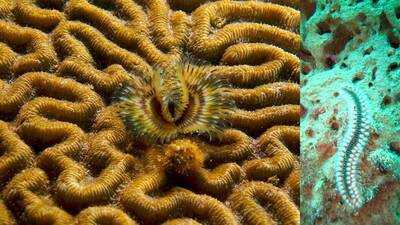
Metamorphosis can transform an animal's body from a swimming larva into a very different adult form. Although biologists have studied these changes for decades, they still have questions about what happens to the cells during the transition. Do the original larval cells disappear and get replaced by newly developed adult cells, or do some survive and change their biological functions?
A study of the California acorn worm, Schizocardium californicum , offers evidence for the second possibility. Researchers analysed more than 87,000 cells and found that many larval cells remained present through metamorphosis while their patterns of gene activity changed. Led by first author Paul Bump and senior author Christopher Lowe, the team published its findings in "Distinct cell states define larval and adult body plans in a hemichordate." The study provides evidence that extensive changes in cellular identity can accompany normal development in an animal with bilateral symmetry, meaning its left and right sides broadly mirror each other, as they do in humans.
A worm that starts life as a swimming head
Metamorphosis is part of the life cycle of about 80% of animal species, which progress from egg to larva to adult, although the cellular processes involved are not fully understood. Two ideas have prevailed. One claims that the larval cells die off and a new set of adult cells takes over. The alternative believes that each cell preserves its former job, such that larval skin cells just become adult skin cells.
Schizocardium californicum was an unusual test subject because it has a dramatic difference between its larval and adult forms. The adult worms live in shallow tidal bays along the Pacific coast and burrow more than a foot into muddy sand. Researchers collected specimens from a tidal flat in Morro Bay, California. The larvae hatch as transparent, rounded organisms measuring about 0.1 millimetre across. During their first three months, they swim in seawater and feed on phytoplankton, using rows of tiny hair-like cilia to move food towards their mouths. Christopher Lowe describes them as little more than swimming heads. During metamorphosis, they develop an elongated body and grow to about 3 to 4 millimetres. They muddy seabed, burrow and begin filter feeding.
The species is rarely used in laboratory research, so the team had to adapt techniques developed for other animals. That scarcity was part of the reason Lowe's group studied it. His laboratory investigates marine organisms that are not traditional laboratory models because they can reveal how development has evolved across the animal kingdom. Common research animals such as mice and zebrafish develop directly from embryos into adults, leaving scientists with less information about species that pass through a distinct larval stage. Even the California acorn worm's close relative, the Virginia acorn worm, hatches in a shape that already resembles its adult form. Understanding the California species therefore required researchers to follow its cells through the dramatic transition. 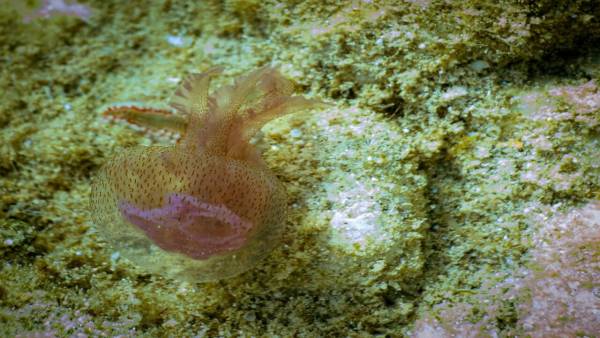
Tracking cells through the makeover
First author Paul Bump, then a doctoral student in Lowe's laboratory at Stanford's Hopkins Marine Station and now an assistant professor at Pomona College, used single-cell RNA sequencing to examine the worms. This which genes are active in individual cells, allowing researchers to compare their patterns of gene expression. The team analysed 87,021 cells across five developmental stages: early larvae, late larvae, metamorphosis, early juveniles and late juveniles. The researchers grouped the cells into 12 major classes, including cartilage, immune, skin, muscle and neural cells. They used these data to create a detailed cellular atlas showing how the animal's composition and gene activity changed during development.
The pattern showed that developmental stage had a strong influence on cellular identity. Many larval cells had gene expression profiles more similar to other larval cells than to adult cells performing comparable functions. For example, larval neurons were more similar in their gene activity to larval gut cells than to adult neurons. This pattern appeared in more than half of the cells analysed. Muscle and mesoderm cells were notable exceptions because their transcriptional profiles remained relatively similar from the larval to the juvenile stage. These findings suggest that many cells undergo broad changes in gene activity during metamorphosis, while some maintain more stable identities.
Gene expression data alone could not establish whether the original larval cells had survived metamorphosis. Bump therefore used a second method to investigate their fate. He labelled some larval cells with a persistent dye before transformation and examined the animals afterwards. The labelled cells remained present in the juvenile body, showing that at least some larval cells survived the transition rather than being replaced entirely. Combined with the gene expression results, this supports the possibility that cells persist while undergoing substantial changes in their transcriptional identity. The researchers therefore found evidence against a model in which the larval body is simply discarded and replaced by an entirely new set of adult cells. 
Why the finding matters
Cellular reprogramming has usually been studied in the context of injury, tissue repair and regeneration, rather than as part of ordinary development. Some evidence of similar processes has also been reported in sponges and jellyfish. The acorn worm study adds evidence from an animal with bilateral symmetry, in which the left and right sides of the body broadly mirror each other. Acorn worms belong to the phylum Hemichordata, a group evolutionarily related to vertebrates, which includes mammals. Lowe described cellular reprogramming as an unusual process in developmental biology and suggested that studying more animals with larval stages could reveal whether these changes are more widespread than previously understood.
The findings have some limitations. The research focused on one species and combined gene expression analysis with dye labelling to follow cells through metamorphosis. Further studies of other animals with larval stages will be needed to establish how widespread this type of cellular reprogramming is. The researchers describe their results as evidence of extensive changes in cellular identity, while noting that more work is needed to understand the precise mechanisms. Their findings are reported in Nature Communications in the same paper. The study suggests that metamorphosis involves more than removing an old body and constructing a new one. Many larval cells appear to survive while changing their patterns of gene activity as the animal develops. This provides a closer look at how a dramatically different adult body can emerge from a larva without replacing every original cell.
Contact to : xlf550402@gmail.com
Copyright © boyuanhulian 2020 - 2023. All Right Reserved.