World Series Will Feature 2 Bottom-Half Payroll Teams for 1st Time Since 1991/ TezzBuzz/ WASHINGTON/ J. Mansour/ Milwaukee’s pennant guarantees the first World Series between two bottom-half payroll teams since 1991, with Cleveland or Tampa Bay set to join the Brewers. The matchup comes as owners argue for a salary cap and players reject the proposal ahead of a potential December lockout. The teams’ success highlights the distinction between postseason breakthroughs and the longer-term advantages associated with higher spending.
Quick Look
- Historic matchup: Both World Series participants will rank in MLB’s bottom half for payroll.
- Milwaukee advances: The Brewers swept the Dodgers and will host the opener Oct. 23.
- Payroll rankings: Milwaukee ranked 19th, Tampa Bay 25th and Cleveland 30th as of Aug. 31.
- Big spenders eliminated: The Mets, Dodgers and Yankees each opened with payrolls exceeding the three remaining clubs’ combined total.
- Labor dispute: Owners have proposed a salary cap and floor, which players oppose.
- Potential stoppage: A management lockout is considered likely to begin Dec. 2, threatening the 2027 season.
Deep Look
Brewers Set Up Rare World Series Between Lower-Payroll Teams
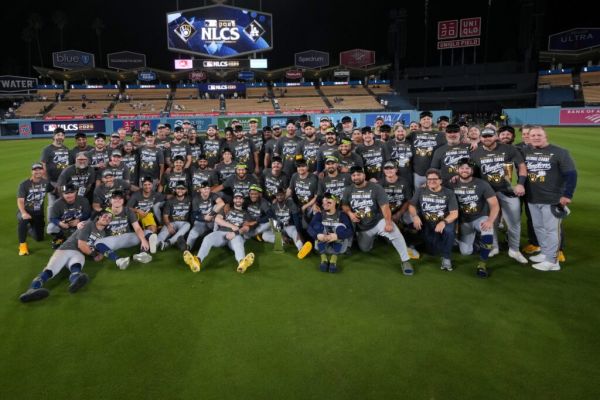
NEW YORK — The Milwaukee Brewers’ sweep of the Los Angeles Dodgers ensured that baseball’s next champion will emerge from a World Series featuring two teams in the bottom half of major league payrolls for the first time in 35 years.
Milwaukee will face either Cleveland or Tampa Bay in the best-of-seven championship series beginning Oct. 23.
The matchup arrives as owners argue that lower-spending clubs need a salary cap to compete consistently, setting up a contrast between this postseason’s results and a broader debate over baseball’s financial structure.
The Dodgers, New York Mets and New York Yankees have all been eliminated. Each began the season with a payroll larger than those of the Brewers, Guardians and Rays combined.
Payroll Rankings Recall Minnesota-Atlanta Series in 1991
Milwaukee had MLB’s 19th-highest payroll as of Aug. 31. Tampa Bay ranked 25th and Cleveland last among the league’s 30 teams.
The last World Series featuring two bottom-half payroll clubs came in 1991, when Minnesota, ranked 15th among 26 teams, defeated Atlanta, which ranked 19th.
Since that Twins championship, only three World Series winners have had bottom-half payrolls: the 2002 Anaheim Angels, 2003 Florida Marlins and 2017 Houston Astros.
Milwaukee earned its place this year by sweeping the two-time defending champion Dodgers in four NLCS games.
Opening-Day Payrolls Show Spending Gap
The Mets led opening-day payrolls at $358.4 millionfollowed by the Dodgers at $323.3 million and Yankees at $302.8 million.
Milwaukee opened at $125.9 millionTampa Bay at $90.5 million and Cleveland at $75.5 million.
Together, those three lower-payroll clubs totaled $291.9 million — less than any one of the three highest-spending teams.
Their postseason success nevertheless comes amid disagreement over how often clubs with fewer payroll commitments can sustain championship contention.
Market Size and Payroll Tell Different Stories
Payroll rankings are separate from market size.
Milwaukee ranks as MLB’s smallest Designated Market Areaor DMA, under Nielsen’s television-market definitions. Cleveland ranks 22nd and Tampa Bay 15th.
A Cleveland pennant would produce the first World Series between two clubs in the bottom half of MLB markets by DMA since St. Louis defeated Detroit in 2006.
St. Louis ranked 24th and Detroit 18th.
No small-market team has won the World Series since Kansas City in 2015.
Manfred Says Higher Spending Improves Chances Over Time
Commissioner Rob Manfred argued at July’s All-Star Game that individual exceptions do not establish competitive balance.
Manfred maintains that teams with greater financial resources have a stronger chance of advancing through October.
Boras Points to Variables That Shape Postseason Results
Agent Scott Boras acknowledged that greater talent improves a team’s prospects while emphasizing that performance can vary.
The Brewers’ victory over Los Angeles provided a prominent example of a lower-payroll team outperforming a more expensive opponent in a short series.
Players Reject Salary Cap as Lockout Looms
Owners have proposed a salary cap paired with a payroll floor. Players say they will not accept that system.
A management lockout is considered likely to begin Dec. 2, approximately six weeks after the World Series opens, potentially jeopardizing the 2027 season.
Players’ association head Bruce Meyer disputed owners’ claims that some clubs lack the resources to compete.
The dispute recalls the confrontation that followed the 1991 World Series. Three years later, players struck while owners sought a salary cap, leading to the cancellation of the 1994 World Series.
No cap was adopted, and owners did not propose one again until this summer.
More on Sports
Contact to : xlf550402@gmail.com
Copyright © boyuanhulian 2020 - 2023. All Right Reserved.