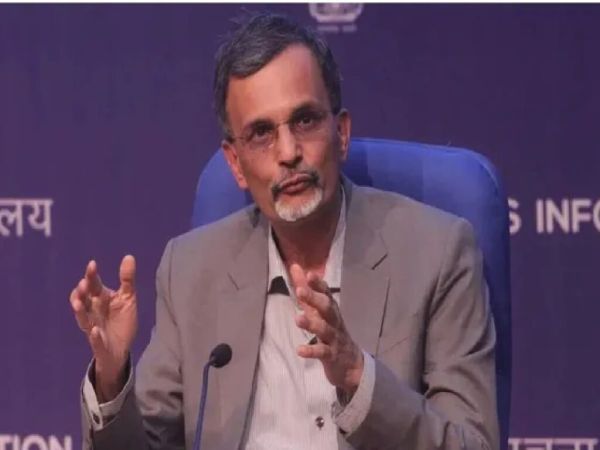
To achieve the national resolve of making India a fully developed nation by the year 2047, the Central Government has clarified a very important and realistic policy stance regarding the economic structure of the country. During a high-level inter-state financial conference organized under the aegis of the Union Finance Ministry, the top policy makers of the country have made it clear in no uncertain terms that the huge and ambitious goal of 'Developed India' cannot be achieved under any circumstances on the basis of public expenditure from the exchequer alone. According to an official statement issued by the Finance Ministry, Dr. V. Ananth Nageswaran, Chief Economic Advisor to the Government of India, while addressing the Finance Ministers, Principal Secretaries and top policy makers of the States and Union Territories on Saturday termed the comprehensive and decisive participation of private capital as the biggest need of the hour. The Chief Economic Advisor underlined that although India's domestic savings base is quite strong by global standards and continued efforts should be made to expand it further, the huge capital investment required for the country's infrastructure, manufacturing and industrial modernization in the coming decades is not possible without active and aggressive financial participation of the private sector. 'Major changes are not possible with just the government budget': Economic Affairs Secretary Anuradha Thakur presented a solid economic blueprint. In the session held on Friday before the Chief Economic Advisor, Department of Economic Affairs (DEA) Secretary Anuradha Thakur had also thrown deep light on this economic reality. According to a joint statement by the Finance Ministry, the DEA Secretary clarified that the central or state budget alone cannot bear the entire financial burden of the structural and technological transformation that the country's economy needs to undergo to achieve the goal of a developed India. He stressed that facilitating capital flows from the private sector, overcoming the limitations of traditional budgetary allocations, using innovative financing instruments, sovereign green bonds, municipal bonds, modern models of Public-Private Partnership (PPP) and establishing a seamless policy coordination between different levels of government—Centre, State and local bodies—will form the real foundation of India's rapid economic progress. 'Foundation of developed India rests on developed states': Center asks states to accelerate pace of attracting investment While interacting with the states in this unique and first of its kind national conference, CEA Dr. V. Ananth Nageswaran shared a very powerful mantra that "The entire existence of developed India completely depends on the developed states." He said that unless the pace of investment at the state level picks up, it will be extremely challenging to maintain the pace of GDP growth at the national level above 8 percent in the long run. Giving practical suggestions to the state governments, Nageswaran said that the best practices adopted by the states, ongoing efforts towards simplifying and business-friendly rules and recommendations made by various economic expert committees should not be limited to mere discussions, but should be translated into institutional agreements with clear responsibilities, strong administrative accountability and fixed timelines. Referring to the global scenario, he warned that within the next five years, when unprecedented opportunities for capital and financing are available in the international financial markets, India will have to increase the pace of internal resource mobilization manifold so that the country can continue its long-term development journey at an uninterrupted pace without any financial constraints. Chief Economic Advisor's 3-point agenda to states: Land reforms, project reports and credit flow to backward districts The country's Chief Economist presented three basic and indispensable priorities to the financial and administrative leadership of state governments, which need to be worked on immediately: Creation of a transparent and accessible environment for private capital: States should ensure availability of suitable industrial land (land banks), continuous and affordable quality power supply and modern logistics infrastructure to promote industry and manufacturing in their own states. Must be given top priority. Additionally, it is essential to make the single-window clearance system completely transparent, faceless and time bound to completely eliminate regulatory hurdles so that no private investor has to visit government offices. Quality of projects and preparation for international funding: States should make their project-preparation pipeline highly professional and transparent. Error free and economically viable Detailed Project Reports (DPRs) should be prepared so as to attract large scale long-term capital at concessional rates from domestic banking institutions as well as multilateral financial institutions such as the World Bank, Asian Development Bank (ADB) and AIIB. Financial expansion in credit-deprived aspirational districts: States will have to rapidly extend the scope of formal institutional credit to those remote and rural districts with immense development potential, which till now have been deprived of mainstream banking facilities and capital flow. To remove financial disparity, it is necessary to launch special credit schemes in collaboration with banks and non-banking financial companies (NBFCs). Calls for a surge in capital expenditure amid fiscal constraints: Mandatory target of taking Capex to 3% of GSDP While acknowledging the fiscal pressures and budgetary constraints faced by the states, the Chief Economic Advisor appealed to the states not to reduce their capital expenditure (Capex) at any cost. Setting clear economic targets, Dr Nageswaran said all states should increase their capital expenditure from the current level of around 2.4 per cent to at least 3 per cent of their respective Gross State Domestic Product (GSDP) by FY 2031-32. Economic analysts believe that every rupee spent by states on creating capital assets—such as roads, modern irrigation networks, digital infrastructure, cold storage and industrial parks—creates a multiplier effect in the economy, which ultimately motivates the private sector to invest heavily and create crores of sustainable employment opportunities for the youth.
Contact to : xlf550402@gmail.com
Copyright © boyuanhulian 2020 - 2023. All Right Reserved.