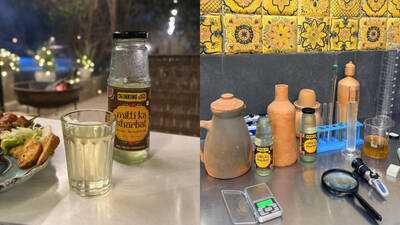
For most Indians, the first rain after a scorching summer brings with it an unmistakable fragrance—the earthy aroma of wet soil, known as petrichor. It is a scent that evokes memories of childhood, monsoons, and afternoons spent outdoors. Now, that familiar aroma has found an unlikely home: inside a bottle.
Kama, the man behind Drinking Safari's latest innovation, Mitti Ka Sharbat, believes Indian beverages deserve the same creativity long reserved for international cocktails. After spending over a decade experimenting with nostalgic Indian flavours, Kama has transformed the scent of earth after rain into a food-grade drink that celebrates local ingredients and memories.
A shift from imported flavours to Indian nostalgia
But Kama's story began long ago when he was a bartender. In the course of his training, he realised that most classic cocktails were made with hard-to-get imported ingredients in India.
"I noticed that most bartenders were trying to recreate international or exotic flavours," explains Kama. "I wanted to do something different and craft beverages with ingredients that Indians themselves are familiar with and enjoy."
This is what Drinking Safari's tagline, 'Desi Handcrafted,' embodies. Over the years, Kama tried to recreate the tastes associated with popular Indian dishes, creating beverages out of ingredients like aam papad and even snack items like Ram Laddoo. His approach was quite simple—to create drinks that evoke memories of India rather than global trends.
The inspiration struck after sprinkling water on the floor 
The idea for Mitti Ka Sharbat didn't occur in some lab but in the backyard of the Drinking Safari pit stop, he recalls.
Each day of summer, employees sprinkled water on the floor before customers appeared. It resulted in the pleasant smell of moist earth hanging in the air.
"It was an extremely relaxing sensation," remembers Kama. "I couldn't help thinking about how I could bottle this up."
Back then, he was aware of the smell but not its scientific name. Later on, he would realize that the smell is known as petrichor, which means the scent of rain upon dry soil.
This idea was also formed unexpectedly, just like most other ideas he had before.
"A lot of my ideas pop up when I am showering," he laughs. "It's the same for this one as well."
An ancient European folk story inspired the experiment 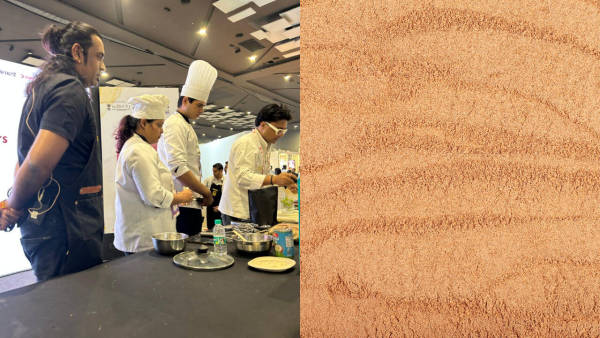
However, the story behind his inspiration goes beyond Indian culture. He recalls how the ancient European folk story, Stone Soup popped into his mind. In that story, a traveler prepares soup by adding water and stones to the villagers' cooking pot.
"Then I got reminded of this ancient story," he says. "I thought, why don't I try making a drink by adding the essence of the earth?" That thought became the start of his three-year-long research.
Three years of research went into making 'mitti' safe to drink
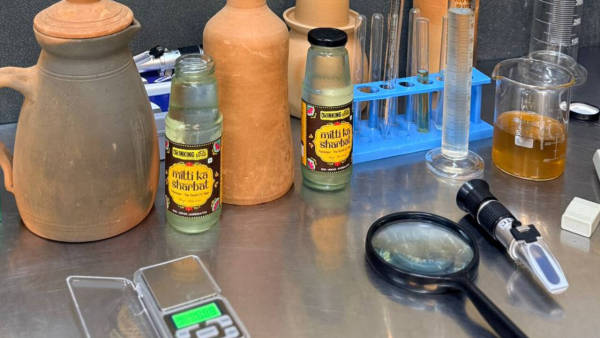
Creating a beverage that mimics the scent of the soil was much more difficult than recreating the fragrance itself.
Initially, Kama tried to collaborate with several fragrance and flavour manufacturers, only to find one significant drawback. The majority of products that mimic the scent of wet soil are not meant for food. "These included substances that contained lead or were not fit for consumption," says Kama. "We could not afford to compromise on food hygiene."
Instead of resorting to conventional attar for perfume, Kama decided to focus on creating a food-grade hydrosol inspired by the age-old extraction method from Kannauj, Uttar Pradesh—India's perfume capital. Despite being inspired by the city of Kannauj, Kama claims that the beverage will be produced in lab conditions adhering to food safety standards.
"We wanted to incorporate the traditional concept while making it hygienic and completely food-safe," says Kama. "Mitti" uses the Multani mitti hydrosol (mitti ka ark) with desi khand as a sweetener.
From concept to trademark
Initial research on Mitti Ka Sharbat started in 2022 when the team spent many years developing the recipe and conducting lab tests. By the end of 2025, all the necessary steps for finishing the recipe and obtaining FSSAI approval were completed. The company considered patenting its recipe but eventually opted for a trademark because it found out that recipes are hard to patent due to existing regulations. Now the drink is ready for production with a shelf life of three to six months and sells in 300 ml bottles costing about ₹120.
Bottling a memory 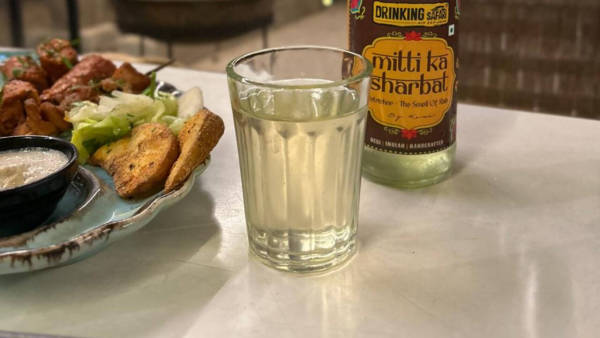
To Kama, Mitti Ka Sharbat is not only a drink but also a way to bottle an emotion. Without using imported syrups and tropical fruit extracts, it is possible to capture one of the most common feelings in India – the smell of rain falling on dry soil. It becomes clear that the era of innovative beverages which use only local ingredients and ideas has arrived. The drink provides the consumer with a fragrance which he/she knows since birth but in a completely different way.
Images Courtesy: On Special Arrangement
Contact to : xlf550402@gmail.com
Copyright © boyuanhulian 2020 - 2023. All Right Reserved.