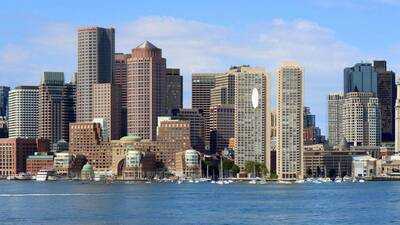
Boston is one of the oldest cities in the United States, yet the story behind its name is often overlooked. Long before it became associated with the American Revolution, universities and Red Sox baseball, the settlement was a small Puritan colony on a peninsula known by entirely different names. The place that would become Boston was shaped by Native American history, English migration and a decision made by colonial leaders only months after they arrived in New England. The name itself did not originate in North America at all. Instead, it crossed the Atlantic with settlers who wanted their new capital to reflect a familiar place at home, linking the growing colony with a town that already had centuries of history behind it.
How Boston got its name: From the first name Shawmut to Boston 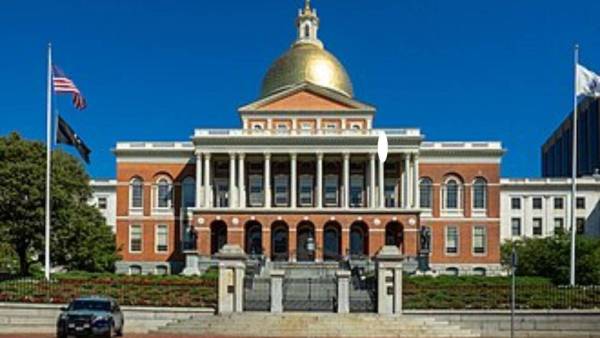
When English settlers arrived in 1630, the peninsula where Boston now stands was already known as Shawmut by the local Native Americans. English settlers also referred to the area as Trimountaine, or simply Trimount, a reference to the three prominent hills that dominated the landscape.
the origin of the name Trimount is uncertain, although it was almost certainly given by English visitors rather than Native Americans. Two of those hills disappeared during later land-reclamation projects as Boston expanded, while the remaining central hill survives today as Beacon Hill. The city's Tremont Street still preserves a variation of that early colonial name.
The settlement itself only became possible after William Blackstone , who had been living alone on Shawmut following the collapse of an earlier colony, encouraged the Massachusetts Bay settlers to relocate. Brooks notes that Blackstone informed Governor John Winthrop about a reliable spring on the peninsula and invited the colonists to establish themselves there, providing access to much-needed fresh water.
Why is Boston named after an English town 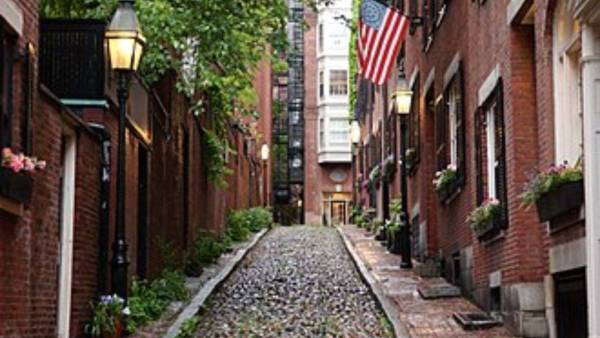
The decision to rename Trimount came shortly after the colony was established. On 7 September 1630, the Massachusetts Bay Colony 's Court of Assistants formally ordered that "Trimountaine shall be called Boston," while several neighbouring settlements also received their official names.
As per the History of Massachusetts, the choice had been planned well before the settlers reached Shawmut. In a letter written in 1631, colonial leader Thomas Dudley explained that the founders had always intended to give their capital the name Boston, regardless of its final location. He wrote that they named the settlement Boston, "as we intended to have done the place we first resolved on."
The reason was straightforward. Many influential members of the Massachusetts Bay Company, including prominent Puritan leaders, had emigrated from Boston in Lincolnshire, England. Naming their new capital after their former home reflected those connections and carried a sense of continuity between the old settlement and the new colony taking shape across the Atlantic.
The origin and meaning of the name Boston 
The English town itself has a much older history the name is linked to Saint Botolph , a seventh-century English saint associated with travellers and farmers.
Over time, the place name evolved from forms connected with Botolph, producing the modern name Boston. Historians have interpreted the meaning as either Botwulf's Stone or Botwulf's tun, with tun being an Old English term for a small settlement or village.
Saint Botolph's influence remained visible in the English town through St Botolph's Church, one of Lincolnshire's best-known medieval churches. The church also formed part of the Puritan story that eventually reached New England. Reverend John Cotton served there for more than two decades before leaving England for Massachusetts, while religious reformer Anne Hutchinson had attended his sermons before making the same journey. Reportedly, an old saying among early settlers was that "the lamp in the lantern of St. Botolph's ceased to burn when Cotton left that church," a symbolic way of expressing that its spiritual influence had travelled to New England.
Why is Boston also called Beantown
Although its official name honours an English town, Boston later acquired a distinctly local nickname. Today, it is widely known as Beantown, a reference to a food that became closely associated with colonial New England.
Reportedly, baked beans served with brown bread formed a regular part of the Puritan diet and remained deeply connected with the region's culinary traditions for generations. As the city grew, the association became so familiar that Beantown emerged as one of Boston's enduring nicknames.
The city's landscape, meanwhile, continued to change. The three hills that inspired the original name Trimount were gradually reshaped during extensive nineteenth-century land-making projects, altering the geography of the peninsula while leaving small reminders of its earliest identity in places such as Beacon Hill and Tremont Street. Even so, the decision made by colonial officials in September 1630 ensured that the city would forever carry the name of the Lincolnshire town from which many of its founders had come.
Contact to : xlf550402@gmail.com
Copyright © boyuanhulian 2020 - 2023. All Right Reserved.