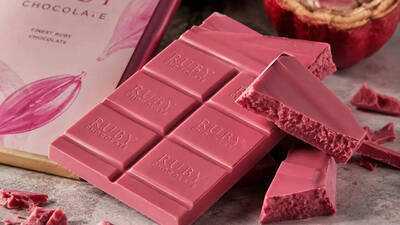
Chocolate usually arrives with a sense of familiarity. People expect the deep bitterness of dark chocolate, the softer sweetness of milk chocolate, or the creamy richness that comes with white chocolate. Ruby chocolate interrupts that expectation almost immediately. It is pink without looking artificial, fruity without containing obvious fruit, and recognisable as chocolate while somehow tasting slightly unlike it at the same time.
Its rise has been unusually quick. A few years ago, ruby chocolate appeared mostly inside luxury confectionery displays and carefully plated desserts. Now it turns up in bakery counters, supermarket shelves, ice cream coatings and café drinks. The colour attracts attention first, though the flavour tends to keep the conversation going longer. Some people compare it to berries, others notice a mild sharpness closer to yoghurt or fruit cream. Either way, it rarely tastes exactly how people expect.
How Ruby chocolate became the fourth chocolate category
Ruby chocolate entered the global market in 2017 after chocolate manufacturer Barry Callebaut introduced it following years of research and development. The company described it as a separate chocolate category rather than a variation of existing white or milk chocolate.
According to , the chocolate comes from specially selected cocoa beans processed in a way that preserves the naturally pink tone and fruity flavour compounds found inside the bean itself. That point became central almost immediately because many consumers assumed the colour came from artificial dyes or berry additives. The industry had seen coloured chocolate products before, though most depended on flavouring, colouring agents or decorative coatings. Ruby chocolate arrived differently. Its pink appearance formed part of the cocoa process rather than surface decoration, which gave it a stronger identity inside the confectionery market .
How Ruby chocolate is different from traditional chocolate
The flavour profile tends to surprise people more than the colour. Ruby chocolate does not carry the roasted heaviness associated with dark chocolate, nor does it taste as sugary as white chocolate often can. Instead, the first impression is slightly tart.
That acidity changes how the sweetness behaves. As per the report by the chocolate feels lighter on the palate, with berry-like notes appearing before the creamy finish settles in. Some pastry chefs use that sharpness deliberately in desserts because it cuts through rich ingredients more effectively than traditional milk chocolate.
Part of the unusual taste comes from the cocoa processing itself. Standard chocolate production usually involves fermentation and roasting stages that deepen darker cocoa flavours over time. Ruby chocolate moves through a different balance of handling and processing, preserving fresher and brighter flavour characteristics instead.
How Ruby chocolate became a favourite in modern dessert culture
Dessert culture has become increasingly visual over the past decade, particularly online, where appearance often matters before flavour is even discussed. Ruby chocolate entered that environment at exactly the right moment.
Pastry shops and luxury bakeries quickly began using it in glazes, truffles, layered cakes and decorative work because the colour photographs cleanly without looking synthetic under bright lighting. Even simple desserts appeared more distinctive once the soft pink tone was introduced.
The shade itself shifts slightly depending on preparation. Some products lean closer to pale rose while others appear darker and warmer. That variation gives ruby chocolate a less manufactured appearance than many artificially coloured sweets, which helped it gain wider acceptance beyond novelty desserts.
Contact to : xlf550402@gmail.com
Copyright © boyuanhulian 2020 - 2023. All Right Reserved.