Luxury tables say cheese to desi artisanal picks
Next time you tuck into a cheese-led dish at a fine-dining restaurant, look closer—you might find an Indian artisanal cheese in place of a classic import. Chefs say they are increasingly showcasing homegrown cheeses across global menus. This shift shows Indian artisanal cheeses are moving into luxury menus, with recent wins bringing greater attention to the local cheese market.
Mausam Narang, founder of Eleftheria , who recently won three medals for Indian artisanal cheese on an international platform, says, “Recognition like this shows that our milk, our terroir, and our cheesemaking craft can compete at the highest level. It puts India firmly on the map as a serious producer of artisanal cheese.”
Chef Rohit Sangwan, executive chef at The Taj Mahal Palace, adds, “Diners today are far more receptive to Indian artisanal cheeses. When presented in familiar formats, there is strong acceptance, along with a growing curiosity about origin, craftsmanship, and locally sourced ingredients.”
Chefs using Indian cheeses in international dishes
Luxury restaurants are increasingly using Indian artisanal cheeses to recreate global dishes with a local edge. Chef Shankar Biswakarma, sous chef at Pangeo, says, “At our kitchen, we use Indian buffalo milk burrata in dishes like Caprese and bruschetta; malai paneer in place of halloumi for grilled platters and wraps; and aged or smoked paneer to add depth to fusion plates—allowing us to retain the essence of global dishes while highlighting local produce.”
Celebrity chef Kunal Kapur, founder of Pincode, adds, “In my kitchens, we use paneer much like ricotta in agnolotti or ravioli with brown butter and even whip it for spreads or desserts. Kalari/Kaladi from Jammu & Kashmir works like halloumi for us—it grills beautifully and fits into salads, small plates, and even burgers, making it easy to bring Indian cheeses into international formats.”
Selectively replacing imported cheese
Chef Sangwan says, “Chefs are selectively replacing imports with Indian equivalents, such as Kalari, which is used as a substitute for mozzarella due to its stretch and melt; Bandel cheese replaces feta or smoked cheeses in salads and small plates; and Topli nu paneer or artisanal fresh cheeses stand in for ricotta or burrata-style applications.”
Chef Kapur adds, “While some imported cheeses like Parmigiano Reggiano or aged Cheddar offer very specific flavours, local cheeses are increasingly matching up. From fresh Topli nu paneer to smoked Bandel, Indian cheeses bring strong character, better sustainability, and a sense of place.” He adds, “Chefs are now choosing them not as a compromise but as a conscious choice, and I think that’s an exciting space for Indian cuisine right now.”
Why chefs are choosing local
According to chefs, they prefer using local cheeses to maintain freshness, texture, and a stronger sense of terroir. Chef Shankar Biswakarma, sous chef at Pangeo, says, “The shift is driven by factors such as freshness, cost, sustainability, and flavour. Indian artisanal cheeses offer superior freshness and more pronounced flavours due to minimal transit time. At the same time, they provide better cost efficiency, consistent availability, and a more sustainable approach, making them a practical choice for modern kitchens.”
Chef Mahtab Ansari, executive chef at Sayaji Hotel Vadodara, says, “Indian cheesemakers are experimenting with indigenous herbs, spices, and ageing conditions unique to the subcontinent. This allows chefs to create fusion profiles exclusive to India, such as cumin-tempered Gouda or chilli-rubbed artisanal cheddar, offering diners flavours rooted in both global techniques and local identity.”
Challenges in producing artisanal cheese in India
Speaking about the challenges cheese producers face in India, Mausam says, “India’s climate and infrastructure make cold-chain management difficult, and cheeses like bloomy rinds and blue cheeses are very sensitive. A lot of effort goes into controlling temperature, humidity, and handling at every stage.” She adds, “Consumer awareness, market depth, and the consistent availability of high-quality raw materials also remain ongoing challenges.”
How to use Indian cheeses in everyday dishes
Snacks: Paneer is the easiest option—grill, pan-sear, or add to sandwiches for a quick, versatile bite.
Salads & spreads: Use soft cheeses like chhena or Topli nu paneer. Whip with herbs like coriander or mint and spread on toast; try adding chilli honey for a sweet-spicy twist.
Sandwiches: Kaladi works best for a desi-style sandwich—cook it on a hot tawa and serve in soft kulchas with chutney and a crunchy topping.
Pizzas & pastas: While the classic mozzarella stretch is hard to match, cheeses like Bandel add a smoky, salty flavour. Mix with paneer or Kaladi for better melt and texture.
(
as suggested by Chef Kunal Kapur)
Indian cheeses that made a mark globally
-
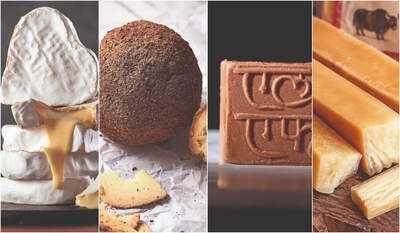
Gulmarg, a Brie-style cheese, is soft and creamy with a thin white rind. It has a mild, earthy taste and a smooth texture, making it a premium choice.
-
Yak Churpi-Soft is a traditional Himalayan cheese from Ladakh and nearby regions. It is firm, slightly tangy, and often made by drying or fermenting it in the sun.
-
Brunost, a whey-based cheese, is made by reducing whey. It has a sweet, caramel-like taste and a soft, fudge-like texture due to the caramelisation of milk sugars.
-
Kaali Miri, inspired by Belper-Knolle, is a crumbly cheese coated in black pepper. It is usually aged for a stronger flavour and commonly grated over food like a spice rather than eaten in pieces.
Mausam Narang, founder of Eleftheria , who recently won three medals for Indian artisanal cheese on an international platform, says, “Recognition like this shows that our milk, our terroir, and our cheesemaking craft can compete at the highest level. It puts India firmly on the map as a serious producer of artisanal cheese.”
Chef Rohit Sangwan, executive chef at The Taj Mahal Palace, adds, “Diners today are far more receptive to Indian artisanal cheeses. When presented in familiar formats, there is strong acceptance, along with a growing curiosity about origin, craftsmanship, and locally sourced ingredients.”
Chefs using Indian cheeses in international dishes
Luxury restaurants are increasingly using Indian artisanal cheeses to recreate global dishes with a local edge. Chef Shankar Biswakarma, sous chef at Pangeo, says, “At our kitchen, we use Indian buffalo milk burrata in dishes like Caprese and bruschetta; malai paneer in place of halloumi for grilled platters and wraps; and aged or smoked paneer to add depth to fusion plates—allowing us to retain the essence of global dishes while highlighting local produce.”
Celebrity chef Kunal Kapur, founder of Pincode, adds, “In my kitchens, we use paneer much like ricotta in agnolotti or ravioli with brown butter and even whip it for spreads or desserts. Kalari/Kaladi from Jammu & Kashmir works like halloumi for us—it grills beautifully and fits into salads, small plates, and even burgers, making it easy to bring Indian cheeses into international formats.”
Selectively replacing imported cheese
Chef Sangwan says, “Chefs are selectively replacing imports with Indian equivalents, such as Kalari, which is used as a substitute for mozzarella due to its stretch and melt; Bandel cheese replaces feta or smoked cheeses in salads and small plates; and Topli nu paneer or artisanal fresh cheeses stand in for ricotta or burrata-style applications.”
Chef Kapur adds, “While some imported cheeses like Parmigiano Reggiano or aged Cheddar offer very specific flavours, local cheeses are increasingly matching up. From fresh Topli nu paneer to smoked Bandel, Indian cheeses bring strong character, better sustainability, and a sense of place.” He adds, “Chefs are now choosing them not as a compromise but as a conscious choice, and I think that’s an exciting space for Indian cuisine right now.”
Why chefs are choosing local
According to chefs, they prefer using local cheeses to maintain freshness, texture, and a stronger sense of terroir. Chef Shankar Biswakarma, sous chef at Pangeo, says, “The shift is driven by factors such as freshness, cost, sustainability, and flavour. Indian artisanal cheeses offer superior freshness and more pronounced flavours due to minimal transit time. At the same time, they provide better cost efficiency, consistent availability, and a more sustainable approach, making them a practical choice for modern kitchens.”
Chef Mahtab Ansari, executive chef at Sayaji Hotel Vadodara, says, “Indian cheesemakers are experimenting with indigenous herbs, spices, and ageing conditions unique to the subcontinent. This allows chefs to create fusion profiles exclusive to India, such as cumin-tempered Gouda or chilli-rubbed artisanal cheddar, offering diners flavours rooted in both global techniques and local identity.”
Challenges in producing artisanal cheese in India
Speaking about the challenges cheese producers face in India, Mausam says, “India’s climate and infrastructure make cold-chain management difficult, and cheeses like bloomy rinds and blue cheeses are very sensitive. A lot of effort goes into controlling temperature, humidity, and handling at every stage.” She adds, “Consumer awareness, market depth, and the consistent availability of high-quality raw materials also remain ongoing challenges.”
How to use Indian cheeses in everyday dishes
Snacks: Paneer is the easiest option—grill, pan-sear, or add to sandwiches for a quick, versatile bite.
Salads & spreads: Use soft cheeses like chhena or Topli nu paneer. Whip with herbs like coriander or mint and spread on toast; try adding chilli honey for a sweet-spicy twist.
Sandwiches: Kaladi works best for a desi-style sandwich—cook it on a hot tawa and serve in soft kulchas with chutney and a crunchy topping.
Pizzas & pastas: While the classic mozzarella stretch is hard to match, cheeses like Bandel add a smoky, salty flavour. Mix with paneer or Kaladi for better melt and texture.
(
as suggested by Chef Kunal Kapur)
Indian cheeses that made a mark globally
-
Gulmarg, a Brie-style cheese, is soft and creamy with a thin white rind. It has a mild, earthy taste and a smooth texture, making it a premium choice.
-
Yak Churpi-Soft is a traditional Himalayan cheese from Ladakh and nearby regions. It is firm, slightly tangy, and often made by drying or fermenting it in the sun.
-
Brunost, a whey-based cheese, is made by reducing whey. It has a sweet, caramel-like taste and a soft, fudge-like texture due to the caramelisation of milk sugars.
-
Kaali Miri, inspired by Belper-Knolle, is a crumbly cheese coated in black pepper. It is usually aged for a stronger flavour and commonly grated over food like a spice rather than eaten in pieces.
Contact to : xlf550402@gmail.com
Copyright © boyuanhulian 2020 - 2023. All Right Reserved.