
I love it when fashion gives me a déjà vu. It’s a positive feeling when you see something on a runway or tucked neatly into a brand’s summer edit and it feels… familiar. Like you’ve seen it last winter in a crowded lane, hanging off a metal rack, priced somewhere between ₹300 and ₹800, depending on your bargaining skills.
And then you look again at the label this time and realise it’s Ralph Lauren.
Take their recent Print Cotton Wrap Skirt, currently retailing at ₹44,800. A breezy, red-and-blue cotton wrap skirt with a distinctly block-printed sensibility, with a fall that breathes in heat and moves without resistance. It is, objectively, a pleasant garment. Easy, wearable, summery.
It is also, unmistakably, something you could find — almost identically — in Bapu Bazar or sourced out of Surat, where generations of artisans and small-scale manufacturers have been producing similar textiles long before “resort wear” became a category.
The difference, of course, is not in the cloth. It’s in the narrative.
We get that people at Ralph Lauren love India — and hey, we love being loved. Especially after years of enduring a certain tone of global criticism, sometimes about things we won’t defend. Yes, we’re colourful people. Quite happy with that. Yes, some of us have questionable civic sense — we’re working on it.
But our craft… our craft, gentlemen, is top-notch. And all the colourful people working under the sun to make it look good enough to inspire luxury brands deserve credit. Don’t they?
The aesthetic without the acknowledgement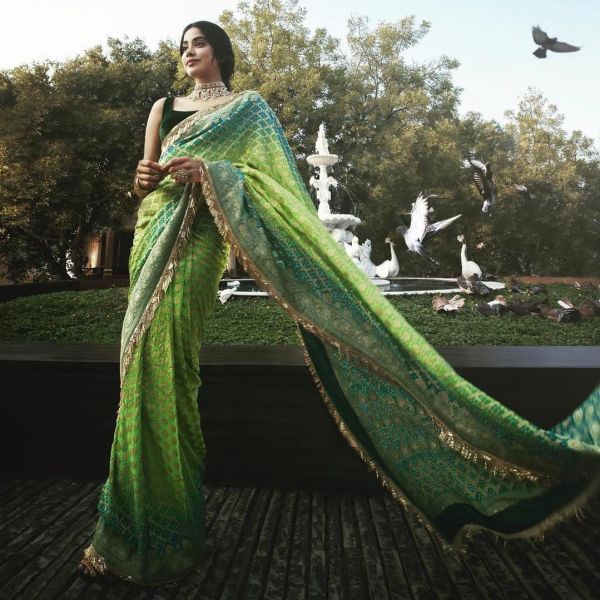 Manish Malhotra
Indian textile vocabulary is not subtle. Block prints, resist dyes, vegetable pigments, regional motifs — these are not vague inspirations; they are specific, traceable traditions. You can walk through a single market in Jaipur and identify at least four different printing techniques by eye alone.
So when a global house like Ralph Lauren presents a piece that so clearly borrows from this visual language, the omission of credit doesn’t feel accidental.
This isn’t about expecting a heritage American brand to suddenly become an ambassador for Indian craft. It’s about acknowledging source material when it is this explicit. Because at ₹44,800, you are no longer selling just a skirt — you are selling authorship.
We’ve seen this before, repeatedly Ralph Lauren
This isn’t even a first offence. The brand has previously faced criticism for styling models in distinctly Indian elements — jhumkas, most notably — without any acknowledgement of their cultural origin. Accessories that carry centuries of craft, reduced to aesthetic punctuation.
And Ralph Lauren is far from alone in this.
Luxury fashion, despite its obsession with heritage, has a curious habit of borrowing from living cultures without extending the same reverence. From European houses reinterpreting African beadwork to high-fashion iterations of Mexican embroidery appearing season after season, the pattern is familiar: extract, refine, upscale and omit.
The language used is always the same — "inspired,” “reimagined,” “global influences.” Words that sound expansive, but often function as erasure.
The price of this so-called refinementLet’s talk about the ₹44,800.
Because the argument often made is that luxury isn’t about the raw material. It’s about finishing, branding and experience.
Fair. To a point.
But when the design itself, the print language, the silhouette, even the colour story, remain so close to what is already being produced in markets like Bapu Bazar, the markup begins to feel like relocation. The garment hasn’t evolved; it has simply moved, geographically and economically.
From artisan to atelier. From ₹500 to ₹44,800.
Why this still matters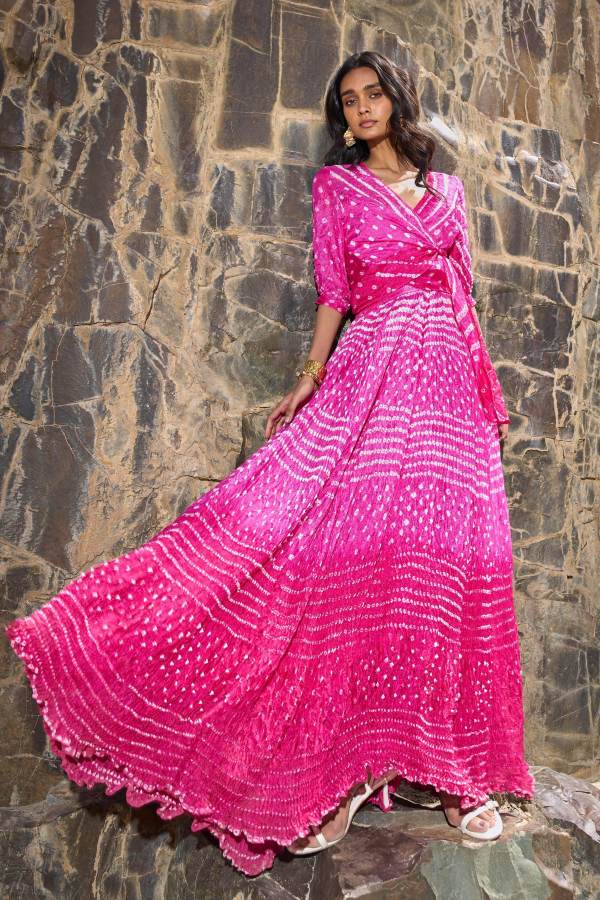 Dash & Dot
There’s a tendency to dismiss these conversations as cyclical outrage. Fashion borrows, fashion reinterprets, hasn’t it always?
Yes. But there is a difference between dialogue and extraction.
Indian craft is not an abstract archive waiting to be mined. It is a living, breathing ecosystem sustained by artisans who rarely see the margins their work generates once it enters global circulation. When their visual language is lifted without credit, it doesn’t just flatten history; it redirects value.
And credibility, even for legacy brands, is not immune to this.
Because today’s consumer, especially the one willing to spend ₹44,800 on a cotton skirt, is far more informed than before. They recognise a block print when they see one. They know where to find it. And increasingly, they are asking, "who made this first?”
The cost to legacy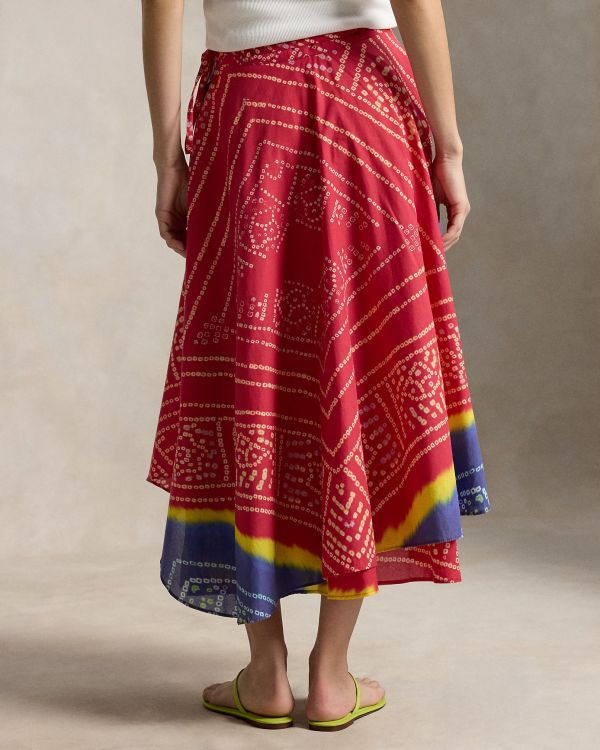 Ralph Lauren
Brands like Ralph Lauren have built decades of trust on the idea of authenticity of a certain world they invite you into. But authenticity cannot be selectively applied.
You cannot celebrate heritage as a concept while sidestepping it in practice. Because over time, these small omissions accumulate. In conversations, in consumer perception, in the recalibration of what the brand stands for.
And that is where the real cost lies. Not in a single skirt or a single season, but in the slow erosion of credibility.
Closing ThoughtsThere is, of course, a version of this story that could have unfolded differently. One where the same skirt carried a line about its inspiration, its technique, its lineage. Where the narrative expanded instead of erased.
But that would require something fashion has historically been selective with — credit.
Until then, the lanes of Bapu Bazar and the workshops of Surat will continue to do what they’ve always done: create, innovate, sustain.
And somewhere else, those same ideas will keep returning neatly packaged, carefully priced and disconnected from where they began.
Lead Image Credit: Ralph Lauren
Contact to : xlf550402@gmail.com
Copyright © boyuanhulian 2020 - 2023. All Right Reserved.