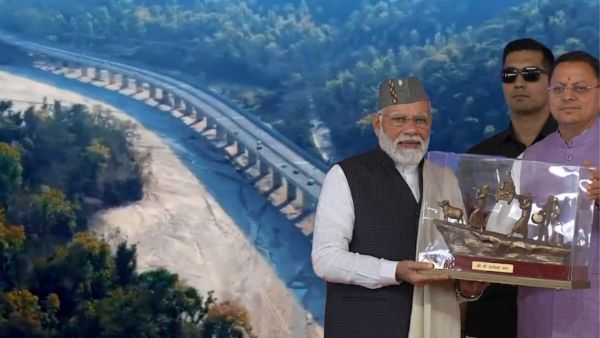
PM Modi Inaugurates Delhi–Dehradun Expressway: Prime Minister Narendra Modi on Tuesday inaugurated the Delhi–Dehradun Expressway, a major infrastructure project aimed at transforming connectivity between the national capital and Uttarakhand.
Ahead of the formal launch, Modi inspected the wildlife passage along the elevated stretch in Saharanpur and later offered prayers at the Jai Maa Daat Kali Temple. The Prime Minister also held a roadshow in Saharanpur, where large crowds turned out to welcome him with slogans, cultural performances, and flower showers. He is scheduled to dedicate the corridor to the nation at a public event in Dehradun and address attendees.
Delhi–Dehradun Expressway: High-Speed Corridor To Transform Travel
Also known as the Delhi–Dehradun Economic Corridor, the 213-kilometre expressway spans Delhi, Uttar Pradesh, and Uttarakhand, built at a cost exceeding Rs 12,000 crore. The six-lane, access-controlled highway is expected to drastically cut travel time between Delhi and Dehradun from over six hours to approximately two and a half hours.
#WATCH | Dehradun, Uttarakhad: Prime Minister Narendra Modi inaugurates the Delhi–Dehradun Economic Corridor.
The corridor will reduce travel time between Delhi and Dehradun from over 6 hours to around 2.5 hours. It has been designed with several features aimed at significantly… pic.twitter.com/Sf3R242bBt
— ANI (@ANI) April 14, 2026
The project includes ten interchanges, three railway overbridges, four major bridges, and twelve wayside facilities. It is also equipped with an Advanced Traffic Management System aimed at improving road safety and efficiency.
Focus On Wildlife Protection & Sustainability
Given the environmentally sensitive regions the highway passes through, special emphasis has been placed on ecological safeguards. One of the standout features is a 12-kilometre elevated wildlife corridor—among the longest in Asia—designed to ensure safe movement of animals and reduce human-wildlife conflict.
These measures reflect a broader attempt to balance infrastructure development with environmental conservation.
Toll Structure, Construction Model
The expressway includes four toll plazas. While standard toll rates apply for general users, those with FASTag annual passes will pay just over ₹60 for a single journey across all four plazas.
The project has been executed using a hybrid model that combines both greenfield and brownfield development. The initial stretch from Akshardham to Khekra near the Eastern Peripheral Expressway upgrades an existing route into an elevated six-lane road. The second phase, extending roughly 120 kilometres towards Saharanpur, has been built entirely on a new alignment.
A ‘New India’ Connectivity Push
Leaders have described the expressway as a milestone in infrastructure growth, highlighting its role in enhancing regional connectivity, reducing travel time, and supporting economic activity.
The corridor is being seen as a key addition to India’s expanding highway network, aimed at improving mobility while integrating modern technology and sustainability features.
Contact to : xlf550402@gmail.com
Copyright © boyuanhulian 2020 - 2023. All Right Reserved.