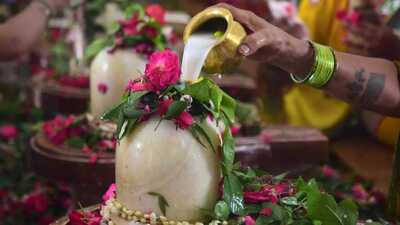
India is a land of festivals. Here, every festival has its own charm, rules, and foods associated with it. The festival of Maha Shivratri is here and as the name suggests, it is dedicated to Lord Shiva. On this day, devotees observe fast and offer prayers to Lord Shiva and the day also celebrates the wedding of Lord Shiva and Maa Parvati. This auspicious festival also involves fasting rituals, where devotees fast to please the deity, offer flowers and foods to the Shivling, and pray for the wellbeing of their family and loved ones.
Maha Shivratri Puja timing
The auspicious time for puja is the Nishita Kaal (midnight), occurring between 12:09 AM and 01:01 AM on February 16, 2026.
Maha Shivratri 2026 Puja Timings (4 Prahars):
First Prahar: 06:11 PM – 09:23 PM (Feb 15)
Second Prahar: 09:23 PM – 12:35 AM (Feb 16)
Third Prahar: 12:35 AM – 03:47 AM (Feb 16)
Fourth Prahar: 03:47 AM – 06:59 AM (Feb 16)
Also Read:
Types of fasting
As per experts, there are three types of fast. Take a look:
Nirjala fast: In this type of fasting, devotees do not eat or drink anything.
Phalahara fast: In this, devotees eat fruits and dry fruits and also consume coffee, tea, water, and juices. No salt is allowed during this fast.
Samapta: In this type of fast, devotees eat everything mentioned in pahalahara, along with one full meal that consists of sweets, and no grains are allowed in it.
Also Read:
How to observe fasting on Maha Shivratri
As per an Instagram post by Bhavesh Bhimanathani, this is how one should observe fast on Maha Shivaratri.
14th February 2026 (Previous Evening)
• Have an early and light dinner
• After this, avoid all meals
• Begin the vrat in a calm, settled state
15th February 2026 (Mahashivratri Day)
Food Guidelines
• Consume fruits, nuts, or follow a liquid diet
• In the evening, you may take a light alkaline vegetable soup
• Avoid tea and coffee throughout the day
• After the evening intake, refrain from all food

Dos
1. On this day, fast honestly and follow the rituals diligently.
2. On this day, take a bath, clean the house, and sprinkle Gangajal.
3. Place Lord Shiva’s idol or picture in the northeast direction of the house and offer him Bael Patra, Chandan, Dhatura, Bhaang, and raw cow milk. Follow the pooja rituals and then perform the aarti.
4. Whatever type of fasting you observe, do not starve yourself. Keep eating nuts and fruits every two hours.
5. On this day, while fasting, devotees can eat nuts, fruits, dairy products like milk and butter, and selected flours like Kuttu ka Atta (buckwheat flour), Singhare ka Atta (water chestnut flour), or Rajgira ka Atta (amaranth flour).
6. Drink water, milk, buttermilk, and fresh juices throughout the day to keep the body hydrated.
7. Replace table salt with rock salt or sendha namak for cooking recipes during the holy month. Also, while using spices, stick to cumin seeds, cinnamon, green cardamom, cloves, black pepper powder, red chili powder, and black peppercorns.
8. Reading holy books such as Shiv Chalisa is rewarding for fast-observers.

Don’ts
1. During worshiping Lord Shiva, avoid using ketki flowers and turmeric.
2. On this day, the consumption of onions, garlic, and spices should be avoided.
3. Also, other foods and oils like mustard oil, masoor dal, and brinjal should be avoided.
4. Apart from these, the consumption of meat, eggs, alcohol, and tobacco is also strictly prohibited during Sawan.
5. Avoid drinking packaged juices, as they may contain added salt and preservatives to enhance the flavor.
Images Courtesy: istock
Contact to : xlf550402@gmail.com
Copyright © boyuanhulian 2020 - 2023. All Right Reserved.